

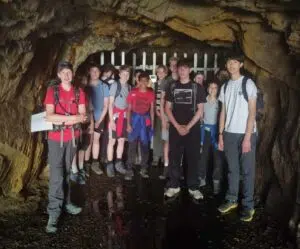
71 Third Form students, accompanied by members of the Geography Department, set off on the annual Geography field trip to the Lake District. Combining academic study with outdoor exploration, the visit provided an invaluable opportunity for students to experience first-hand many of the landscapes and processes they have been studying in the classroom. Educational visits of this nature often depend on two key ingredients: favourable weather and enthusiastic staff. Fortunately, this year’s trip benefitted from both, helping to create a memorable and highly successful experience for all involved.
The Lake District, renowned for its dramatic scenery and rich geographical significance, offered the perfect outdoor classroom. Throughout the trip, students were able to observe geographical concepts in action, strengthening their understanding and appreciation of the subject through direct experience.
 One of the key destinations was Ambleside, one of the region’s most popular tourist settlements. Here, students investigated the impact of tourism on a rural community, examining both the opportunities and challenges that arise from the area’s popularity with visitors. Through a range of fieldwork activities, they explored how tourism contributes to the local economy by supporting shops, restaurants, accommodation providers and other services that rely heavily on visitor spending.
Students also considered some of the less positive consequences of tourism, including traffic congestion, pressure on local infrastructure, environmental impacts and the challenges associated with seasonal fluctuations in visitor numbers. Working in groups, they collected data, made observations and evaluated different viewpoints, demonstrating a strong understanding of the complex relationship between tourism, local communities and the natural environment. Their engagement with the fieldwork tasks was exemplary, and many showed impressive analytical skills when discussing the evidence they had gathered.
The group also travelled to Coniston, where the focus shifted from human geography to the physical processes that have shaped the Lake District’s iconic landscape. Students explored a range of glacial landforms and investigated the powerful forces that transformed the region during the last Ice Age. Seeing these features in person allowed students to connect classroom theory with real-world examples and develop a deeper understanding of glaciation.
Among the features examined were U-shaped valleys, corries and moraines, all of which provided clear evidence of the erosional and depositional processes associated with glaciers. Students identified these landforms in the landscape, discussed how they were formed and considered their significance in understanding past environmental conditions. The opportunity to stand within these landscapes and observe geographical features at first hand brought their studies vividly to life and helped reinforce key concepts in a way that textbooks alone can’t.
Beyond the academic benefits, the trip also provided opportunities for students to develop independence, teamwork and observational skills while enjoying some of Britain’s most spectacular scenery. The positive attitude, enthusiasm and curiosity shown throughout the visit were a credit to the School, with students embracing every aspect of the experience.
Visits such as these remain a vital part of geographical learning, enabling students to deepen their understanding of the world around them while fostering a lifelong appreciation of the natural environment.